
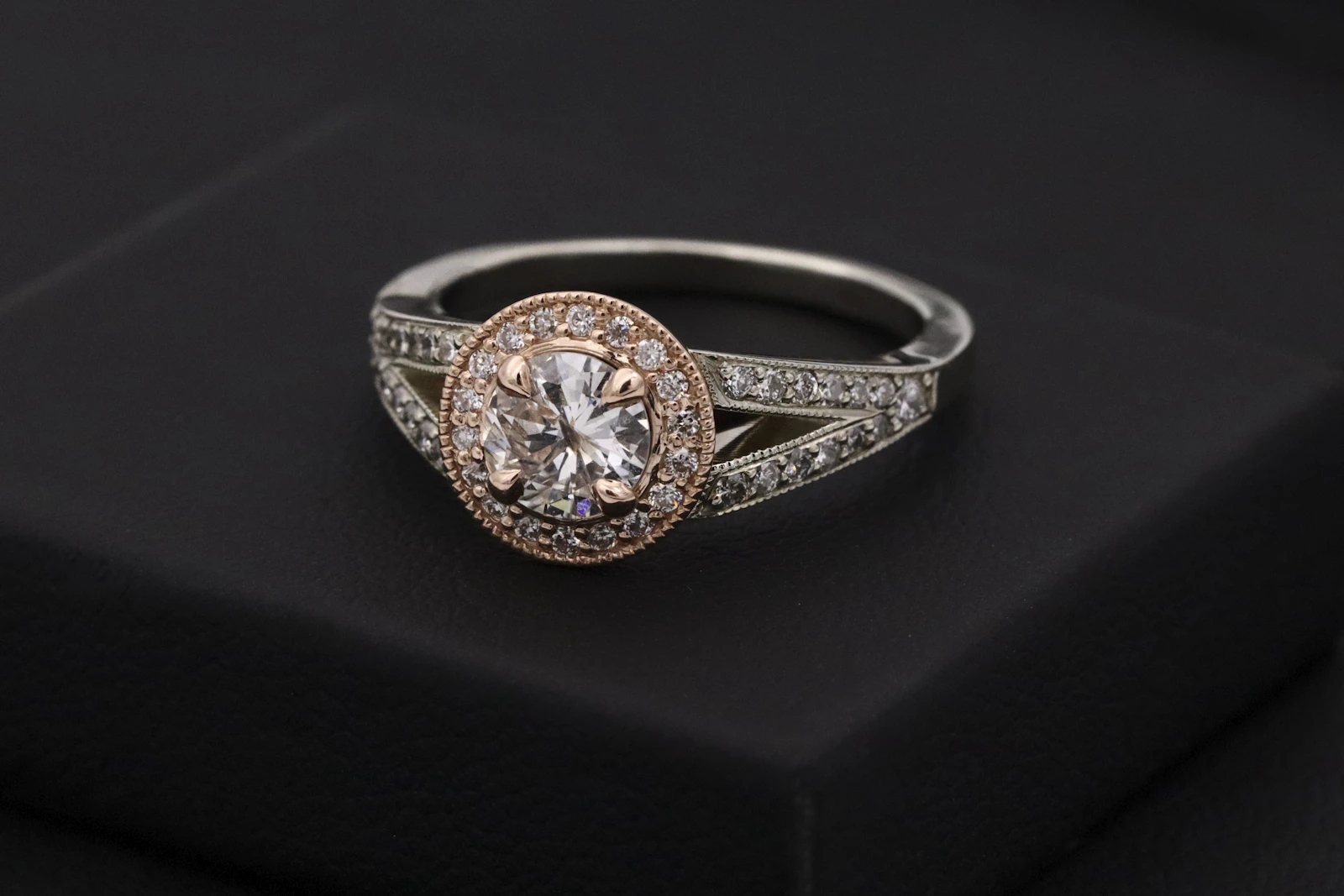
If you are shopping for a ring and wondering how big is a 1 carat diamond, the short answer is that a round one measures about 6.3 mm to 6.5 mm across. That is roughly the width of a small pea, and it is the figure most jewellers use as a starting point.
The catch is that carats measure weight, not size, so the same weight can look larger or smaller depending on shape and cut. This guide gives millimeter sizes for each popular shape and explains why two 1 carat stones can look different.
How big is a 1 carat diamond in millimeters?
A carat is a unit of weight. One carat equals 0.2 grams, which means five carats weigh one gram. Because a diamond is a three dimensional object, its weight tells you very little about the width you will see from above. Millimeter measurements are what describe the actual footprint of the stone.
For a well cut round brilliant, published guides give slightly different figures, which is normal because every stone is cut a little differently. Gem Society lists about 6.5 mm, Brilliant Earth lists 6.3 mm, and Whiteflash lists about 6.4 mm. A safe way to remember it is that a round 1 carat diamond sits between 6.3 mm and 6.5 mm in diameter.
Why weight and size are not the same thing
Two diamonds can both weigh exactly one carat and still show a different amount of surface when you look down at them. Weight is spread through the whole stone, including the part below the girdle that the ring setting hides. A stone with more weight hidden in its depth shows a smaller face, while a shallower stone spreads that weight across a wider top.
This is why jewellers talk about spread. Spread is simply how large the diamond looks face up. When you compare stones, always ask for the millimeter measurements alongside the carat weight, because that pair of numbers tells you far more than weight alone.
1 carat diamond size chart by shape
Shape has the biggest effect on how large a diamond appears. Round and square shapes show similar widths, while elongated shapes such as marquise and pear stretch the same weight over a longer surface. The table below combines figures from two published guides, so treat each row as an approximate range.
| Shape | Approximate size for 1 carat |
|---|---|
| Round | 6.3 mm to 6.5 mm across |
| Princess | About 5.5 mm square |
| Cushion | About 5.5 mm to 5.7 mm |
| Radiant | About 5.5 mm |
| Oval | About 7.7 mm to 8 mm long, 5.5 mm wide |
| Emerald | About 7 mm long, 4.5 mm wide |
| Pear | About 7.7 mm to 9 mm long, 5.5 mm wide |
| Marquise | About 10 mm to 10.5 mm long, 5 mm wide |
One of the guides gives only the length for fancy shapes, while another gives both length and width, which explains why some rows show a range. Real stones vary, so a diamond with a length to width ratio you like may sit slightly outside these numbers.
Round diamonds
The round brilliant is the reference point for every other shape. Its symmetrical cut returns light efficiently, and the measurements are the easiest to compare. If you want the widest possible look for a given weight in a classic style, a well cut round is a dependable pick, although elongated shapes can look bigger at the same weight.
Square and rectangular shapes
Princess, cushion and radiant cuts are smaller across than a round of the same weight, at around 5.5 mm. They tend to be deeper, so more of the weight sits below the girdle. The same logic applies to Asscher cuts, which Gem Society notes show less surface area than a round at equal carat weight.
Elongated shapes
Oval, pear, marquise and emerald cuts stretch across the finger. Because the length is much greater than the width, they often look larger than a round 1 carat stone even though the weight is the same. Marquise shows the most length at roughly 10 mm, which is why many buyers choose it when they want maximum visual impact.
What changes the way a 1 carat diamond looks
Once you know the shape, a few other details decide whether a stone looks generous or modest. These factors are worth checking before you buy.
- Depth percentage. Depth is the height of the diamond divided by its width. Shallow stones can look larger from above, but they often reflect less light and can look dark or lifeless.
- Girdle thickness. A very thick girdle hides weight, so the stone can look smaller than its carat weight suggests.
- Cut grade. Very good, excellent and ideal grades point to proportions that return light well and make the most of the weight you pay for.
- Shape. Elongated cuts show more surface than round or square cuts at the same weight.
- Setting. A thin band, a halo or a raised setting changes how large the stone appears next to the metal.
The Whiteflash guide makes a useful point about cut quality: a poorly cut 1.25 carat round may look similar in size to a well cut 1 carat stone. In other words, paying for extra weight does not help if the cut wastes it below the girdle.
Where to read the measurements on a certificate
Every reputable diamond comes with a grading report that lists its measurements, and this is where you can verify the numbers in the chart above. For a round stone you will usually see a minimum and maximum diameter followed by the depth. For fancy shapes you will see length, width and depth.
Compare those figures with the typical sizes listed earlier. A round stone near 6.4 mm is in the expected range, while one that measures noticeably under 6.3 mm is carrying more of its weight in depth. That is not automatically a bad stone, but it should influence what you are willing to pay.
You can read more about how measurements, spread and depth interact in the Whiteflash guide to diamond measurements and in the Gem Society article on diamond measurements.
How to compare 1 carat diamonds side by side
Comparing several stones is easier when you record the same details for each one. A short checklist keeps the process fair and stops you from being swayed by a single attractive photo.
- Write down the shape and the weight. Keep every stone at the same carat weight so you compare like with like.
- Record the millimeter measurements. Look for the widest face up size within your budget.
- Check the depth and girdle. Avoid stones that hide a lot of weight below the surface.
- Review the cut grade. A strong cut protects both sparkle and apparent size.
- Look at the stone in person or in video. Photos can flatter any diamond, so always ask for a clear video.
A simple spreadsheet helps keep these notes in one place. If your quotes arrive as Excel files from different jewellers, our guide on how to convert Excel to Google Sheets shows how to bring them into a single shared sheet.
Choosing a setting that suits the stone
The setting changes how big a diamond looks on the hand. A slim band and a plain solitaire setting let the stone dominate, while a halo of small stones makes the center diamond look larger by extending the sparkle outward. A bezel setting frames the edge with metal and gives a clean modern look, though it hides a little of the surface.
Band color matters too. Darker metals contrast strongly with a white diamond, which can make it stand out. If you like that look, read our article on what a black wedding ring means to see how darker bands are chosen and what they signal.
Budget and value for a 1 carat stone
A one carat diamond is a popular target because it feels like a milestone, and that popularity can raise prices around round numbers. Buyers sometimes find better value in stones just under the milestone, because the visual difference between 0.95 and 1.00 carat is tiny while the price gap can be noticeable.
Price research takes patience. Treat the process the way you would any large purchase and compare several sources before you commit, a habit we also cover in our breakdown of how much a Highland cow costs, where hidden fees matter just as much as the headline price. Ask each seller for the grading report, the exact measurements and the return policy in writing.
Common mistakes when judging size
- Judging by carat weight alone. Two stones of equal weight can show different face up sizes.
- Ignoring depth. A deep stone may weigh one carat yet look smaller than a better proportioned one.
- Comparing different shapes directly. A marquise and a princess cut of equal weight will never look the same size.
- Trusting photos. Lighting and zoom can exaggerate size, so rely on millimeter numbers.
- Overlooking the ring setting. A thick band or heavy prongs can make the stone look smaller.
Frequently asked questions
What is the diameter of a 1 carat round diamond?
A well cut round diamond of one carat measures about 6.3 mm to 6.5 mm across. Published guides give slightly different values, such as 6.3 mm, 6.4 mm and 6.5 mm, because proportions vary from stone to stone. Check the grading report for the exact figure.
How much does a 1 carat diamond weigh in grams?
One carat equals 0.2 grams, so five carats weigh one gram. This is a weight measurement only. It does not tell you how wide the stone looks, which is why millimeter measurements and cut quality matter when you compare diamonds for a ring.
Do all 1 carat diamonds look the same size?
No. Shape, depth, girdle thickness and cut quality all change the face up size. An oval or marquise looks longer than a round of equal weight, and a poorly cut stone can hide weight below the girdle. Always compare millimeter measurements instead of weight alone.
Which shape looks biggest at 1 carat?
Elongated shapes usually look largest. A marquise measures roughly 10 mm to 10.5 mm long, an oval about 7.7 mm to 8 mm, and a pear about 7.7 mm to 9 mm. Round and square shapes show less surface at the same weight.
Is a 0.9 carat diamond much smaller than 1 carat?
The size difference is small, usually a fraction of a millimeter, so many buyers choose stones just under the one carat mark to save money. Compare the measurements and cut grade of the actual stones, because proportions can matter more than the small weight gap.
Where can I check the size of a diamond before buying?
Read the grading report, which lists the diameter or length and width plus the depth in millimeters. Ask the seller to confirm these numbers in writing and to provide a clear video of the stone. Compare the figures against typical sizes for the same shape.
Conclusion
A round 1 carat diamond measures about 6.3 mm to 6.5 mm across, while other shapes range from roughly 5.5 mm for square cuts to 10 mm or more in length for a marquise. Carat measures weight, so check the millimeter figures, depth and cut grade before you buy, and compare several stones side by side.

Lily Rose is a passionate food blogger with years of experience exploring menus, flavors, and dining trends, delivering clear, reliable insights that help readers discover great food and make confident choices.